


What You’ll Find in this Guide:
- What Are Amex Membership Rewards Points?
- Cards That Earn Membership Rewards in Canada
- How You Earn Membership Rewards Points
- Best Ways to Redeem Amex Membership Rewards
- Amex Membership Rewards Transfer Partners (Canada)
- How Much Are Amex Points Worth in Canada?
- How Amex Points Are Valued (And How to Do the Math Yourself)
- Final Thoughts: Are Amex Membership Rewards Worth It in Canada?
If you’ve been looking at Amex cards in Canada, you’ve probably come across “Membership Rewards” everywhere.
And at some point, you’ve likely asked:
Is this just cashback with extra steps?
Is it actually worth the effort?
Here’s the reality: Membership Rewards is one of the most powerful – and most misunderstood – rewards systems in Canada.
This guide is for people who want to use it properly without turning it into a full-time hobby.
You’ll learn:
- How Membership Rewards actually works
- How to earn points efficiently
- What your points are really worth
- The best (and worst) ways to use them
- Which cards make the most sense for your situation
If you understand how this points system works, you can get significantly more value from your spending, without needing to become a travel expert.
What Are Amex Membership Rewards Points?
Membership Rewards (MR) is American Express’s flexible points program.
Unlike airline-specific programs like Aeroplan, your points aren’t locked into a single ecosystem. You earn points through your Amex card and choose how to use them later.
You can:
- Transfer points to airline programs like Aeroplan
- Transfer to hotel programs like Marriott Bonvoy, Hilton Honors and ALL Accor
- Book travel directly through Amex
- Redeem for statement credits
This “earn now, decide later” structure gives you options, and that’s what creates value.

Cards That Earn Membership Rewards in Canada
American Express offers six cards in Canada that earn Membership Rewards:
- Cobalt Card
- Gold Rewards Card
- Platinum Card
- Green Card
- Business Gold Rewards Card
- Business Platinum Card
Each card earns points differently depending on how you spend.
Not sure where to start?
For most Canadians, the Cobalt Card is the strongest all-around option for earning Membership Rewards from everyday spending. Apply now for the Cobalt Card and start earning up to 5x points on food and groceries.
See our full breakdown of the best Amex cards in Canada to compare your options.
In the next section, we’ll look at how the earn rates compare and which cards come out ahead.
How You Earn Membership Rewards Points
Not all points are earned at the same rate – it depends on how you spend and which card you use.
If your goal is to build points quickly, this is where most people start:
Cobalt Card – Read Review | Apply Now
Here’s how the main Membership Rewards cards in Canada earn points across key categories:
| Card | Groceries / Restaurants | Travel | Gas / Transit | Streaming | Everything Else |
| Cobalt | 5x (up to $2,500/month) | 1x | 2x | 3x | 1x |
| Gold Rewards | 2x (groceries) | 2x | 2x | 1x | 1x |
| Platinum | 2x (restaurants) | 2x | 1x | 1x | 1x |
| Green | 1x | 2x (Amex Travel) | 1x | 1x | 1x |
| Business Platinum | 1.25x | 1.25x | 1.25x | 1.25x | 1.25x |
| Business Gold Rewards* | 1x | 1x | 1x | 1x | 1x |
*Plus 10,000 bonus points per $20,000 in quarterly spend (up to 40,000 points/year)
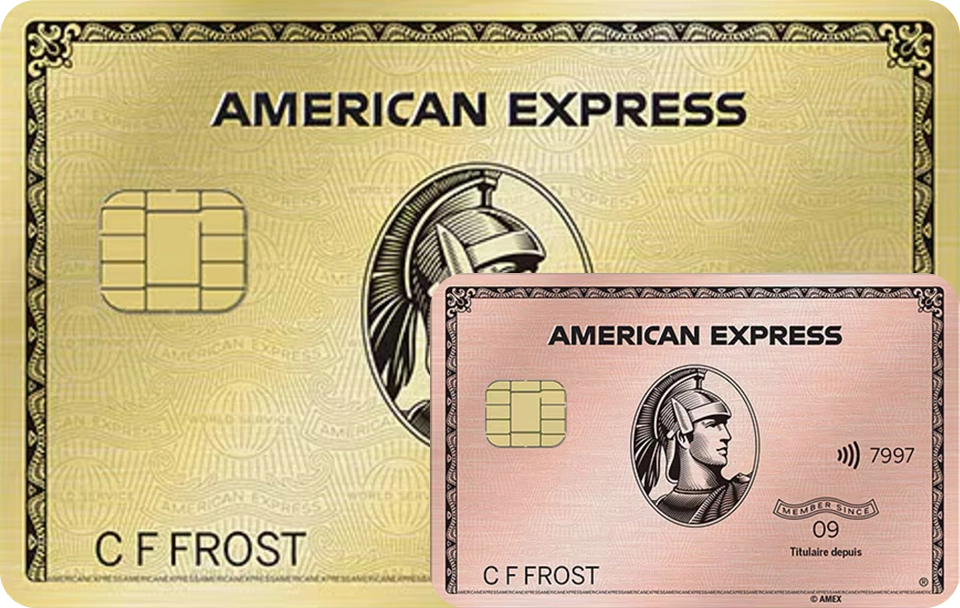
- 2x points on travel
- 2x points on gas, groceries & drugstores
- 1x points on everything else
What This Means in Practice
Here’s how each card actually fits into a real-world strategy:
Cobalt
Cobalt only really wins if your spending is mostly on food and groceries. If it is, the difference between 5x and 1x adds up quickly over the course of a year. If it’s not, the earn rate drops off just as fast.
Gold Rewards
The Gold Rewards card is the most balanced option. It doesn’t lead in any one category, but it earns consistently across groceries, travel, and gas. This makes it a good fit if your spending is spread out.
Platinum
Platinum is not an earning card – it’s a benefits card.
The earn rates are fine, but that’s not where the value comes from. You’re getting travel perks, insurance, and lounge access, not by maximizing points from everyday spending.
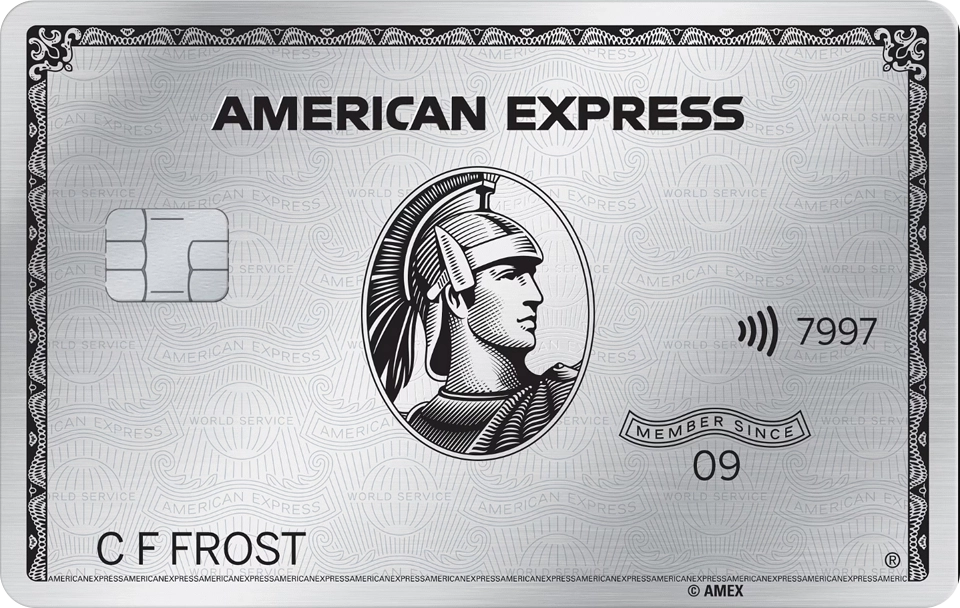
- 2x points on food & drinks
- 2x points on travel
- 1x points on everything else
Business Platinum
You earn a flat rate on everything, which makes it easier to manage if you have high spend and don’t want to track categories.
Business Gold Rewards
The Business Gold card is designed for high spenders.
You’re not earning more per dollar, you’re earning more by spending more. The quarterly bonus structure only really matters if your business consistently hits those thresholds.
Green
As a no annual fee card, the Green Card is more of an entry point.
It lets you start earning Membership Rewards, but it’s not designed to maximize value long term.
Best Ways to Redeem Amex Membership Rewards
This is where Membership Rewards either becomes incredibly valuable – or just average. Not all redemptions are equal, so how you use your points makes a big difference.
Here’s how the main options compare in Canada:
1. Transfer to Airline Partners
(Best Value)
Instead of redeeming your points at a fixed rate, you can transfer them to airline programs and book flights that would otherwise cost significantly more in cash.
For Canadians, this usually means transferring to Aeroplan, which gives you access to Air Canada and its global partner network. That’s where most of the value comes from.
Unlike programs such as RBC Avion, which use a fixed-value system similar to Amex Fixed Points Travel, Membership Rewards also lets you transfer points to airline programs and potentially get more value from the same number of points.
What makes this different:
- The same number of points can be worth more depending on how you redeem them
- The biggest value usually comes from long-haul, business, and first class flights
Why This Matters
A round-trip flight from Vancouver to Tokyo might cost $2,500-$3,000 in cash.
Using Aeroplan, the same flight could cost around 70,000-90,000 points. That’s 3-4¢ per point in value – significantly higher than using points as a statement credit at 1¢ per point.
2. Fixed Points Travel
(Good Value, Simple)
If you don’t want to deal with airline programs, this is the simplest way to use your points.
You book flights through Amex Travel using a fixed points chart, where your points cover the cost of the ticket at a predictable rate.
This can be desirable because:
- It’s simple and easy to use
- There’s no need to search for award availability
- It offers a consistent value that doesn’t change with demand
But, because you’re not using transfer partners you won’t get the higher-value redemptions that come from programs like Aeroplan.
Plan Your Trip: Fixed Points Travel (Amex Travel)
3. Hotel Transfers
(Situational Value)
You can transfer Membership Rewards points to Marriott Bonvoy, Hilton Honors and ALL Accor for hotel stays. Hotel transfers can be useful if you would rather use your points for accommodations than flights, but the value depends on the program and how you redeem.
Marriott Bonvoy and Hilton Honors redemption values can vary considerably by property and date. ALL Accor works differently. Membership Rewards transfer to ALL Accor at a rate of 1,000 MR points = 500 ALL Reward points, and every 2,000 ALL Reward points can be redeemed for a €40 discount on eligible hotel stays, worth roughly $64 CAD at current exchange rates.
This makes Accor relatively straightforward to value and opens up another option for Canadians staying at Fairmont and other Accor properties. Hotel transfers are still situational, so compare the value you will receive before moving your points.
Learn more: How to Transfer Amex Points to Accor in Canada: Complete Guide
4. Statement Credits
(Low Value, High Convenience)
You can redeem Membership Rewards as a statement credit at a fixed rate:
1,000 points = $10
This is the simplest option, but you’re giving up value compared to travel redemptions. It still makes sense for purchases that can’t be booked with points, like Airbnb, ferries, or independent stays, so even though you won’t maximize the value, you can reduce your travel expenses.
Compare Cashback vs Rewards cards: SimplyCash vs Cobalt
5. Gift Cards, Merchandise, and Amazon Pay with Points
(Avoid)
Avoid these redemptions. Gift cards, merchandise from the Amex Rewards catalogue, and “Pay with Points” options consistently offer the lowest value – often less than 1¢ per point.
In almost every case, you’re better off using points as a statement credit instead.
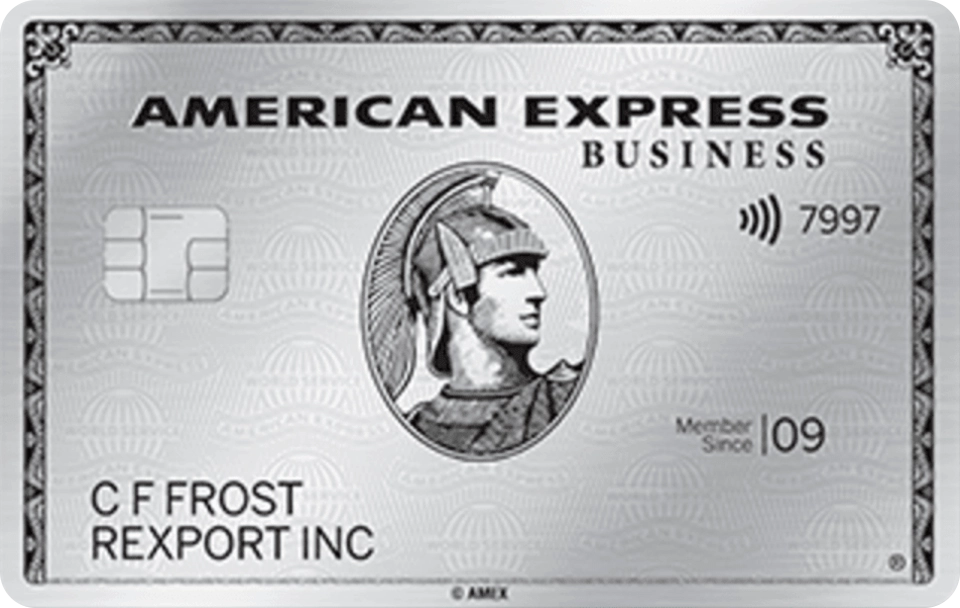
- 1.25x points on everything
Amex Membership Rewards Transfer Partners (Canada)
Membership Rewards points can be transferred to these loyalty programs through the Amex Travel Partners page for both airline and hotel loyalty programs.
Airline Transfer Partners
Amex Canada airline travel partners include:
| Travel Partner | Transfer Ratio | Transfer Example |
| Air Canada Aeroplan | 1:1 | 1000 MR = 1000 Aeroplan points. |
| Air France KLM Flying Blue | 1:0.75 | 1000 MR = 750 Flying Blue Miles. |
| British Airways Club | 1:1 | 1000 MR = 1000 Avios. |
| Cathay Pacific | 1:0.75 | 1000 MR = 750 Asia Miles. |
| Delta SkyMiles | 1:0.75 | 1000 MR = 750 SkyMiles |
Canada has fewer transfer partners than the U.S., but Aeroplan alone covers most global travel through the Star Alliance network. This gives Membership Rewards far more flexibility than most Canadian rewards programs.
Plan Your Trip: Aeroplan Points Predictor (Air Canada website)
However, if you primarily fly WestJet, programs like RBC Avion or WestJet’s own cards may be a better fit than Amex. You can’t transfer Membership Rewards directly to WestJet Rewards.
While Amex does transfer to Delta, Delta miles generally can’t be used to book WestJet flights. WestJet isn’t part of a major airline alliance, so there’s no practical way to redeem points this way.
The RBC Avion card is currently offering a $100 cash rebate through Great Canadian Rebates.

Hotel Transfer Partners
Amex Canada hotel travel partners include:
| Travel Partner | Transfer Ratio | Transfer Example |
| Hilton Honors | 1:1 | 1000 MR = 1000 Hilton Honors points |
| Marriott Bonvoy | 5:6 | 5 MR = 6 Marriott Bonvoy points |
| ALL Accor | 2:1 | 1,000 MR = 500 ALL Reward points |
These programs give you access to a wide range of hotel brands, from budget to luxury:
Marriott Bonvoy: Courtyard, Westin, JW Marriott, Ritz-Carlton
Hilton Honors: Hilton, DoubleTree, Conrad, Waldorf Astoria
ALL Accor: Fairmont, Sofitel, MGallery, Pullman, Novotel and more
This gives you hotel options across a wide range of price points, including Canadian Fairmont properties such as Fairmont Chateau Whistler, Fairmont Pacific Rim, Fairmont Banff Springs and Fairmont Chateau Lake Louise.
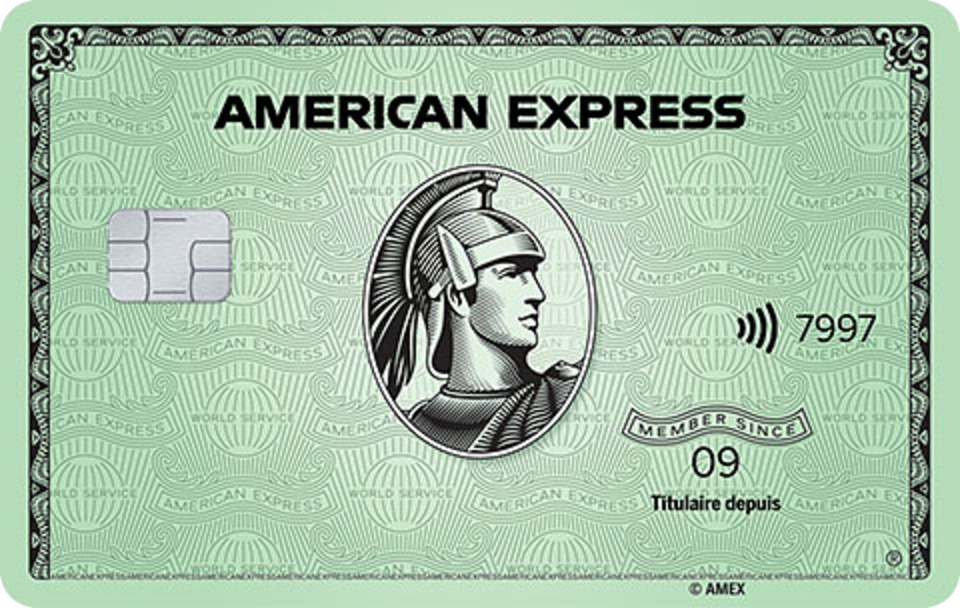
- 2x points on Amex Travel
- 1x points on everything else
How Much Are Amex Points Worth in Canada?
At this point, you’re probably asking: What are my Amex points actually worth?
The value of Membership Rewards points depends on how you use them. In Canada, American Express Membership Rewards points are typically worth anywhere from 0.7¢ to over 5¢+ per point.
At the low end, you’ll get 0.7-1¢ per point when redeeming for gift cards, statement credits, or Amazon purchases.
At the high end, transferring to airline partners like Aeroplan, Flying Blue, or Avios, redemptions can easily reach 2-3¢, and even 5¢ or more on premium cabin flights.
Here’s the typical value range based on real-world redemptions:
| Redemption Method | Approx. Value |
| Aeroplan (economy) | 1.3-2.0¢ per point |
| Aeroplan (business/first class) | 3-5¢ per point or more |
| Flying Blue Promo Rewards | 2-3¢ per point |
| British Airways Avios (short-haul) | 2-3¢ per point |
| Fixed Points Travel (Amex) | 1-2¢ per point |
| Hotel transfers (Marriott/Hilton) | 0.7-1.5¢ per point |
| Hotel transfers (ALL Accor) | 1.6¢ CAD per point |
| Amex Travel (cash fares) | 1¢ per point |
| Statement credits | 1¢ per point |
| Gift cards / Amazon | 0.7-1¢ per point |
Transferring points to airline partners is almost always the best value.
In most cases, economy flight redemptions fall in the 1.3-2¢ range, while higher values come from long-haul, business, or first class flights where cash prices are significantly higher.
The goal isn’t always to hit the highest number – it’s to consistently get more value than fixed or cash-equivalent redemptions.
How Amex Points Are Valued (And How to Do the Math Yourself)
The value of a point is measured in cents per point (CPP). It’s a common way to check if a redemption is worth it.
The Formula
(Cash price – taxes/fees you still pay) ÷ number of points used
Example:
You want to book a flight with Aeroplan that has a cash value of $600. So you transfer 25,000 Amex points to Aeroplan and pay $100 in taxes.
- Flight cost: $600
- Taxes/fees: $100
- Points used: 25,000
$600 − $100 = $500 value
$500 ÷ 25,000 = 2¢ per point
That’s a strong redemption and double the value of using your points for a statement credit at 1¢ per point.
When CPP Matters
- Helps you compare different redemption options
- It prevents you from cashing out at poor value – especially when comparing Amex Fixed Travel vs transferring your points to airline travel partners.
- It’s how travellers redeem 2-5x more value from the same number of points.
You don’t need to calculate this every time, but it’s useful when you’re deciding between options.
If you aim for 1.5-2¢+ per point, you’re getting a good return.
View our Amex Reward strategies to get more value from your Amex points.

- 10,000 points each quarter points on when you spend $20,000 on your card
- 1x points on everything else
Final Thoughts: Are Amex Membership Rewards Worth It in Canada?
Membership Rewards aren’t for everyone.
If most of your travel looks like road trips, Airbnbs, ferries, or independent stays, you’ll likely end up using points as statement credits at 1¢ per point. That’s still useful, but it’s basically cashback.
Where Membership Rewards actually stands out is when you use it the way it’s designed:
- Long-haul flights, especially business or first class
- Airline transfers (like Aeroplan) where pricing is based on distance and availability, not just cash price
- Hotel transfers to Marriott, Hilton or Accor when the redemption value makes sense for your stay
For example, spending $1,500 per month on groceries and dining with a 5x card like the Cobalt can generate over 90,000 points per year.
Those points are worth:
- $900 as statement credits
- $1,200-$2,500+ when transferred and used well for flights
The catch is you don’t get that higher value automatically. You need to:
- Transfer points to the right program
- Find flights that price well on points
- Plan around availability
If you want simplicity, a cashback card like the SimplyCash Preferred is often the better fit.
If you want flexibility and higher value (and you’re willing to learn how redemptions work) Membership Rewards are one of the strongest travel rewards in Canada.
Where to Start?
Keep it simple:
- Start with the Cobalt card for maximizing points on food and groceries. Read Review | Apply Now
- Or a Gold card for consistent earning across groceries, travel, and gas. Read Review | Apply Now
- Then add a Platinum card for travel benefits and insurance. Read Review | Apply Now
Compare the best options and find the right fit:
